

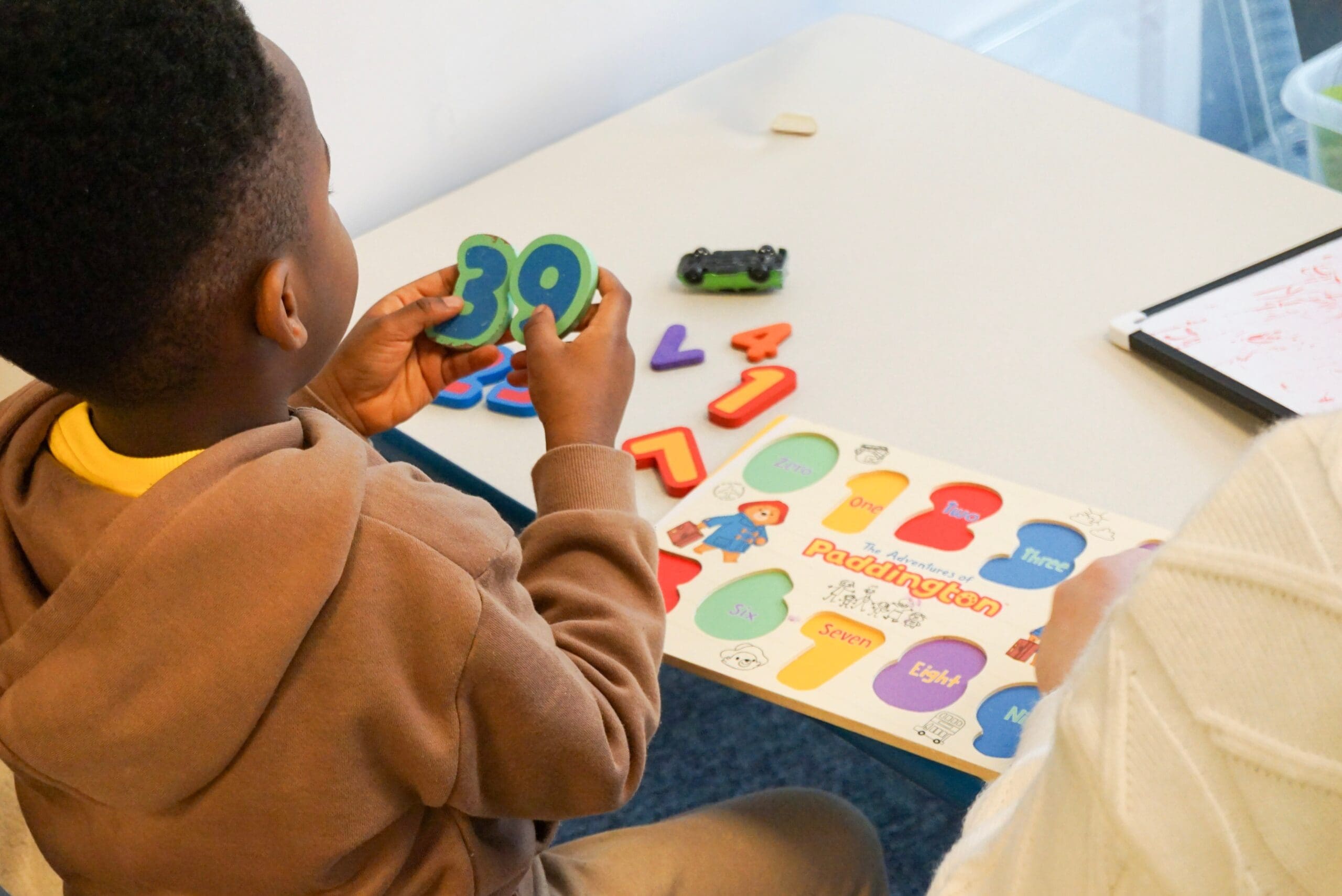
Therapeutic learning is a structured, evidence-based approach that integrates applied behaviour analysis with education, using purposeful play to develop communication, social skills, emotional regulation, and independence in children aged 2 to 9.
When you hear the word “play”, you might picture something light or informal. If you are parenting a child with autism, you may even wonder whether play is enough.
We understand that feeling. When you are thinking about your child’s development, communication, and future education, you want approaches that are purposeful, structured, and grounded in evidence. You want reassurance that time spent playing is also time spent learning.
At First Bridge School, we see play very differently. For us, play is not a break from learning. It is therapeutic learning in action.
Our upcoming webinar is designed to explore how therapeutic learning through play helps children with autism build meaningful skills.
What is therapeutic learning?
Therapeutic learning is an evidence-based educational approach that combines applied behaviour analysis with structured teaching to support children with autism. It uses purposeful, goal-led activities, including play, to develop communication, social skills, emotional regulation, and independence within a specialist SEN school setting.
Therapeutic learning is a structured, intentional approach to teaching that integrates educational goals with therapeutic support. It is grounded in applied behaviour analysis and delivered in a way that is individual to each child.
In simple terms, it means that learning is not separate from development. Every activity has a purpose. Every interaction builds towards communication, independence, and confidence.
At First Bridge School, therapeutic learning includes:
- Individualised teaching programmes
- Close collaboration between educators and therapists
- Continuous assessment and adaptation
- A strong focus on communication and social understanding
This approach is particularly powerful within a special school for autism, where teaching methods are carefully designed around each child’s profile. As one of the leading specialist ABA schools in London, we integrate therapy and education within a consistent school environment.
Therapeutic learning is especially effective in early childhood. Between the ages of 2 and 9, children’s brains are highly responsive to structured support. When therapy and education work together within a SEN school setting, progress can be both measurable and meaningful.
Why is play so important in autism education?
For many autistic children, play does not always develop in the same way as it might for their peers. Some children may prefer repetitive activities. Others may find imaginative or social play difficult. This does not mean they are not capable of rich, joyful play, but they may need support to access it.
Play provides natural opportunities to practise:
- Communication skills
- Turn taking and shared attention
- Emotional regulation
- Problem solving
- Flexibility and coping with change
Through play, children rehearse real-life skills in a safe and predictable environment. A child learning to request a toy is developing functional communication. A child building alongside a peer is practising cooperation. A child engaging in structured role play is developing imagination and perspective taking.
Within autism schools, play becomes a powerful vehicle for structured learning. When it is carefully planned and guided, it supports both developmental and academic outcomes.
How does therapeutic learning use play effectively?
Play in a therapeutic setting is never random. It is planned, observed, and gently shaped to support specific goals.
At First Bridge School, this may include:
- Structured play sessions that target speech and language development
- Small group activities that build social understanding
- Sensory play designed to support regulation and engagement
- Play-based tasks that develop early literacy and numeracy skills
For example, a simple turn taking game may be used to teach waiting, responding to a name, and using short verbal requests. A sensory activity might help a child tolerate new textures while also practising joint attention. A role play scenario can support flexible thinking and communication.
In our special educational needs school, consistency is key. Children benefit from clear routines, predictable expectations, and adults who understand how to respond calmly and constructively. Over time, skills learned in play generalise into other environments, including home and the wider community.
Why does early intervention between ages 2 and 9 matter so much?
Early intervention between ages 2 and 9 improves long‑term outcomes for children with autism.
Early intervention is one of the strongest predictors of long term outcomes for children with autism. The earlier a child receives structured support, the greater the opportunity to build foundational skills.
During the early years, children are developing:
- Core communication abilities
- Social awareness
- Emotional regulation
- Early academic foundations
Therapeutic learning through play allows us to address all these areas within the school day. Rather than separating therapy from education, we embed it into everyday learning.
For families exploring schools for autism, this integrated approach reduces the need for multiple separate appointments. Instead, children benefit from one consistent environment where therapy and teaching work together.
This continuity supports not only development, but emotional security. Children know what to expect. Parents know who to speak to. Everyone works towards shared goals.
What does this look like in at First Bridge School?
First Bridge School provides education for children aged 2 to 9. Many of the children we support have autism, speech and language needs, global developmental delay, or related SEN profiles.
Within our autism education model:
- Class sizes are small and structured
- Each child receives personalised support
- Therapy is embedded throughout the school day
- Staff relationships are consistent and nurturing
Play is woven into daily learning rather than confined to one part of the timetable. Outdoor exploration, imaginative play areas, structured table tasks, and guided social games all become opportunities for therapeutic learning.
Families often tell us that this structure feels reassuring. A clear, evidence-based approach delivered within a calm environment provides both predictability and progress.
How does therapeutic learning through play benefit the whole family?
When children begin to communicate more clearly, engage more confidently, and manage transitions with greater ease, the impact reaches beyond the classroom.
Parents often notice:
- Reduced frustration at home
- Greater independence in daily routines
- Increased willingness to try new activities
These changes can reduce stress and create a clearer sense of direction. Instead of wondering what to try next, families feel supported by a team that understands their child’s strengths and challenges.
Therapeutic learning is not about removing joy from childhood. It is about making play purposeful, supportive, and empowering.
What will we cover in the webinar?
In our upcoming webinar, we will explore:
- What therapeutic learning means in practice within a specialist school for autism
- How play can be structured to support measurable developmental progress
- Why early intervention between ages 2 and 9 is so important
- How First Bridge School integrates applied behaviour analysis within a nurturing school environment
There will also be an opportunity to ask questions and gain clarity about your next steps.
Whether your child has recently received a diagnosis, is awaiting assessment, or you are exploring SEN school options, this session is designed to provide reassurance and practical insight.
Is therapeutic learning right for my child?
Therapeutic learning is particularly beneficial for children with autism who need structured support to develop communication, social understanding, and independence. Within a specialist SEN school, this approach combines applied behaviour analysis with a nurturing educational environment tailored to each child’s needs. If your child would benefit from consistent routines, personalised teaching, and integrated therapy throughout the school day, therapeutic learning may provide the clarity and progress you are seeking.
If you are considering autism specialist schools for your child, it is completely natural to feel uncertain. Our goal is always clarity and partnership. We work alongside families, recognising that parents are central to every stage of their child’s journey.
If you are exploring therapeutic learning and want to understand how play can shape your child’s development, we warmly invite you to join our webinar on Thursday 12 March 2026 at 18:00.